The Power of Relationships
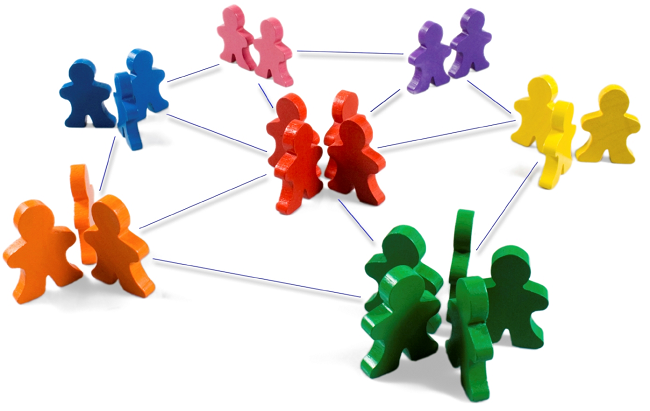
Relationship is defined as “the way in which two or
more concepts, objects, or people are connected, or the state of being
connected.” In Humanities this quarter, we focused on The Power of
Relationships, and learning about it through two different relationships: the relationships the citizen and
the
government, as well as the relationships of characters throughout a story.
 |
| Link |
After evaluating different government, as
well as state laws and citizen rights, I can conclude that citizens and government
are truly interconnected, having strong ties that bind each other. Each one is dependent
of the other, and if one fails to work properly, it can harm, and potentially destroy
the other. We read a book called The Giver this quarter, and the meaning behind
the story has a lot to do with each individual’s rights as well as the government’s
rights. In this society, the government has failed to strive properly, and has
spoiled its citizens. However, at the same time, they can make each other better,
and improve on one another. One example would be through peaceful protest; if
the government has a strong and good relationship with its people, it will
strive to improve on what they criticize.
We can also evaluate how the characters in
the book, The Giver, build a strong relationship. There is the situation
present that the government has failed to strive, but citizens do have
immediate reactions. Because of the relationships between characters going
through the same struggle, it allows them to communicate through feelings,
which can help them go against the opposing force. In the book, the Giver and
Jonas have a very strong relationship that allows them to understand each other
properly, and learn from each other mistakes.
What is the Power of Relationship? We can
tell that they are strong, and connect people in positive, as well as negative
ways. Nevertheless, why are they so powerful? I read a book recently, called the
Alchemist, and it talks about relationships in a strong context. There was a concept
that amazed me called the “Universal Language”. Everyone can speak this language,
no matter who or where you come from. A Language is communicated through
relationships. By how you feel and express yourself to others. This would be my
definition of a relationship. Without relationships, we would not be able to
communicate properly. It is what makes us human. If we cannot relate to each
other, how can we understand each other? Another book I read that also includes
this theme is the Infinite Sea. In this book, there are groups of “Others”, who
want to take out the humanity out of humans. Nevertheless, this humanity is
what allows them to fight back. The fact that the main goal of the protagonists
is to help humanity prosper, is what allows all humans to have a strong
relationship. “The Others” claim that something such as love should be gotten
rid of, as it is a weakness. However, this is entirely wrong, as love can fall
into the category of a strong relationship. Because of love, we earn to take
care of each other, and make each other better, instead of making sure that you
and only you “survive”. The Power of Relationships is one of the most important
factors of allowing the world to strive properly.
Narrowing Down
In a democracy, individual citizens have
their own rights and responsibilities. and it varies in each society. Citizens in different democracies have various
rights and responsibilities. Foremost, citizens have somewhat say in their
government. In the USA, all citizens are responsible for controlling
their government’s
decision, through voting (of age 18 and over). This is an encouraged
responsibility, meaning that it is not mandatory (about 30% of the population
votes). Germany is quite the same, having encouraged voting for citizens of
ages 18 and over. However, in Ancient Greece, only free men that had
citizenship were allowed to vote, and it was a requirement. If you violated
this requirement, or didn’t show up at an assembly, you would be publicly
humiliated. Another responsibility common in many democracies is the taxation
system. Citizens are required to pay taxes, which end up going to the
government. This system goes along the same guidelines in the three different
societies I evaluated (Germany, USA, Ancient Greece). Military Service was also
a requirement for some societies. When men reach a young adult age in Germany,
they are required to serve the military either in armed forces or through
community services (helping elderly and working in hospitals). In Ancient
Greece, citizens were also required to defend their country. A more modern
encouraged responsibility, more of which found in the USA, is to be educated on
current events, particularly what’s happening in your community. A basic
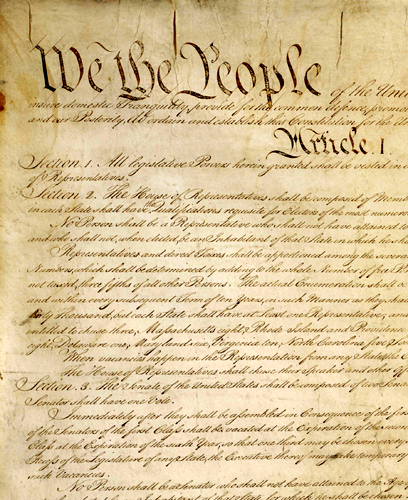
requirement is to follow the constitution and obey the law of the country. This
is an example of the strong, interconnected relationship between citizen and government.
 |
| Link |
A democracy is the best form of government (according
to a class vote), however, it is not the easiest to create and maintain. The
first step to create a democracy is to have a responsible ruling government,
that is capable of creating a society that can be ruled by the people, for the
people. This can be very hard, as many world issue related to government have
to do with corrupt elected officials. Another very controversial topic is how
the society wants to focus on: the protection of individual needs or the
provision of the general welfare. We did an essay on this, and I stated that it
was best to focus on the protection of individual needs, but I do believe they
are both equal. A democracy that includes both of these can be very difficult
to obtain, since there are topics involved that can create a big debate. In our
class, we debated three of these questions, having the topics of Gun Control,
II Amendment; Separation of Church and state; and the Freedom of Speech. If you
believe these are easy topics to support one side, take a look at our debates.
It might change your mind quickly. It might be difficult to maintain a
democracy, but at the end, it is always worth the risk.
Debates
Should a person who is required to wear religious garb
by their belief system be exempt from laws of state that contradict their
beliefs? I was told to defend the yes side; people are exempt from the law. The
main topic this question focuses on is the separation of church vs state. If
there is separation, then the government should not be able to interfere with
the religion of other, and cannot impose laws that go against them. I was in
favor of the individual rights of each person, meaning that everyone has the
freedom of religion. The other side was against the separation, following the
provision of the general welfare, in where they focused on the safety of
others.
 |
| Link |
At first, I did not
agree with what I had to argue; I thought that the law definitely had priority
over a few religions. Nevertheless, after researching about how to defend my
side, I changed my mind. I thought that each religion should be equal; no one
should have priority. However, I was not looking at what the other side could
say. After the debate, I switched again. I forgot that the good of the people
should prioritize over the good of one religion. I am still a little confused
on my topic, as it is very controversial, but do believe that it is easy to
defend either side.
I helped my debate
group by contributing research, as well a strong arguments. I always made sure
we had something to say, no matter who was going to talk. I encouraged some
teammates to talk, since not everyone got a chance. I believe I was very responsible
in this debate, since I was always making sure I had enough to talk about, and
if the debate flow stopped, I would try to bring in a new idea that had not
been discussed. I did face some challenges. There wa one teammate in my debate
group who had a lot to say, so my team let him; however, at some points, he
would say some of the arguments I was planning to say. That made it hard for me
express my ideas on the debate, since we would run out of time, and I would run
out of arguments.
Recap
Overall, I sincerely
enjoyed this quarter. I loved the book we read so much, I decided to read the rest
of the series. It by far has been one of my favorites next to the Power of
Development. I do look forward to what the next unit has in stock for me!
Visual Slide Links:
Visual Slide Links:
Bad Relationship: http://i.dailymail.co.uk/i/pix/2014/02/28/article-2570237-1BEA3F9000000578-116_1024x615_large.jpg
Bill of Rights: http://resourcesforhistoryteachers.wikispaces.com/file/view/Bill_of_Rights.gif/130918833/Bill_of_Rights.gif
Martin Luther King Jr: http://kids.nationalgeographic.com/content/kids/en_US/explore/history/martin-luther-king-jr/_jcr_content/content/textimage_3/image.img.jpg/1399490861264.jpg







No comments:
Post a Comment
Thanks for commenting! :)